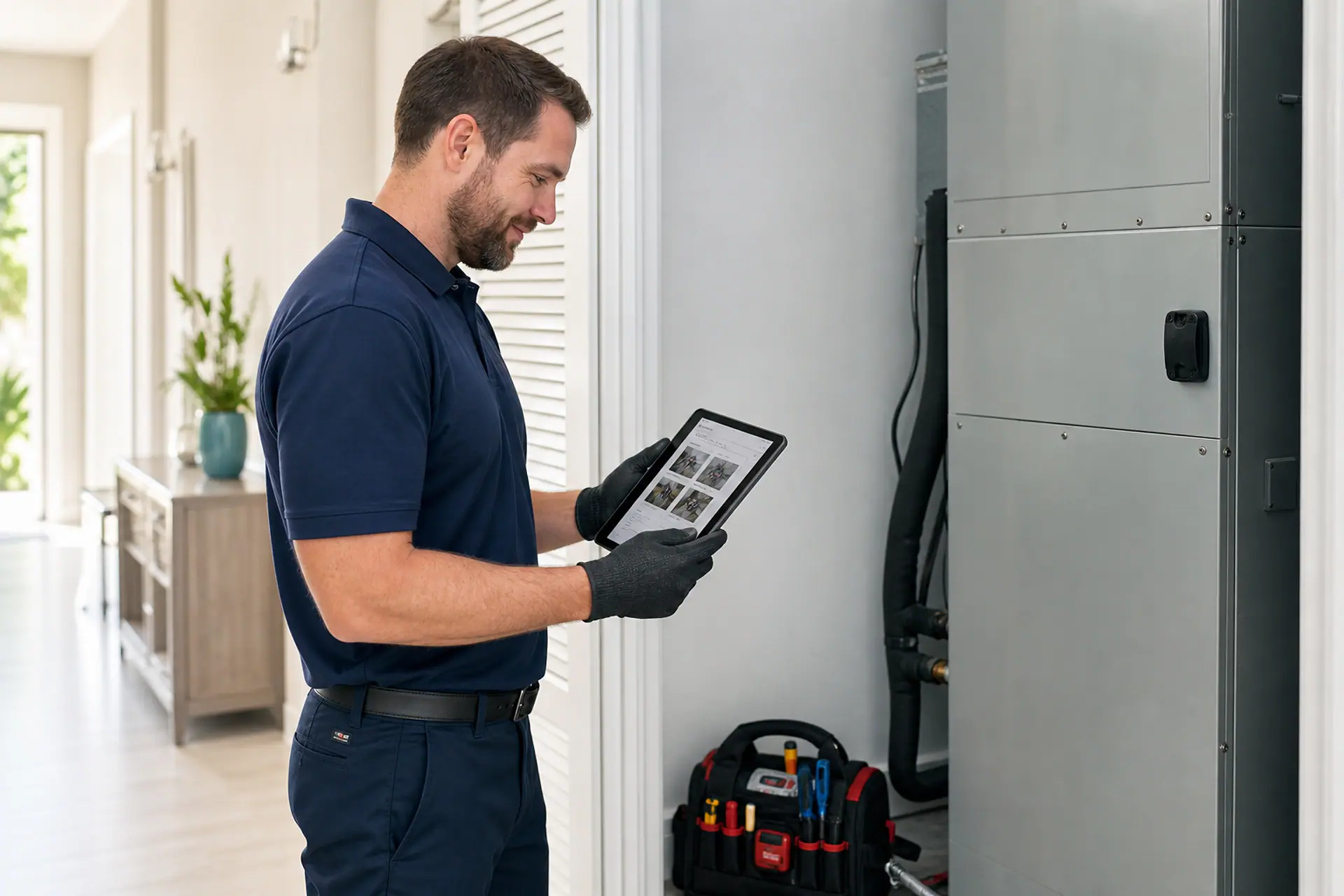
Available hygiene services may include air-handler inspection, evaporator-coil and drain-pan cleaning, condensate-line care, filter inspection, blower-area inspection, UV-system inspection, photographs and recommended next steps.
Refrigerant, electrical and mechanical repairs are separate licensed trades. This website does not claim Chill Guy Air Care performs those services until confirmed.
How it works
Clearateverystep.
001
Tell us what changed
A form, a call, a text or a few photographs of the air handler, mini-split or UV unit. “Not sure” is a valid answer at every step.
002
We inspect the system
Equipment type, access, electrical requirements, materials and current condition are reviewed before any scope exists.
003
You get a defined recommendation
A written scope, an estimate and the practical limits of the work, including what it will not fix.
004
We complete and record it
Approved work only, photographed on completion, with the next lamp or cleaning interval written into the record.
Air-handler cleaning answers
Inspectfirst.Thendefinescope.
01
What parts of an air handler can be cleaned?
Scope depends on access and condition. It may include accessible evaporator-coil surfaces, drain pan, condensate path, blower area, filter area and cabinet surfaces.
02
Does coil cleaning fix weak airflow?
It can help when accessible coil buildup is restricting airflow, but filters, blower performance, ductwork, refrigerant and other mechanical conditions can also be involved.
03
Can you inspect a musty AC smell?
Yes. We can inspect accessible HVAC hygiene and drainage conditions, document what is visible and explain when a separate mechanical, duct or building-moisture evaluation is needed.
Free estimate
Telluswhat’shappening.
Share what you know. “Not sure” is a valid answer at every step.
Tell us the system type, what you have noticed and where the property is. We will help you work out the most appropriate next step, including when the answer is “nothing yet”.